AND World
Online hub for British art festival Abandon Normal Devices

AND is a radical arts organisation curating experiences, commission and incubating new art, cinema and sound, often through collaborations with emerging technology and science.
For the 2021 edition of the festival, I created the minisite andfestival.world, a portal to the festival's exhibitions and events in form of interactive map. This world is designed around the idea of digital waste: data and metadata that are side products of digital media consumption. In this world the code of the website itself floats around the environment.
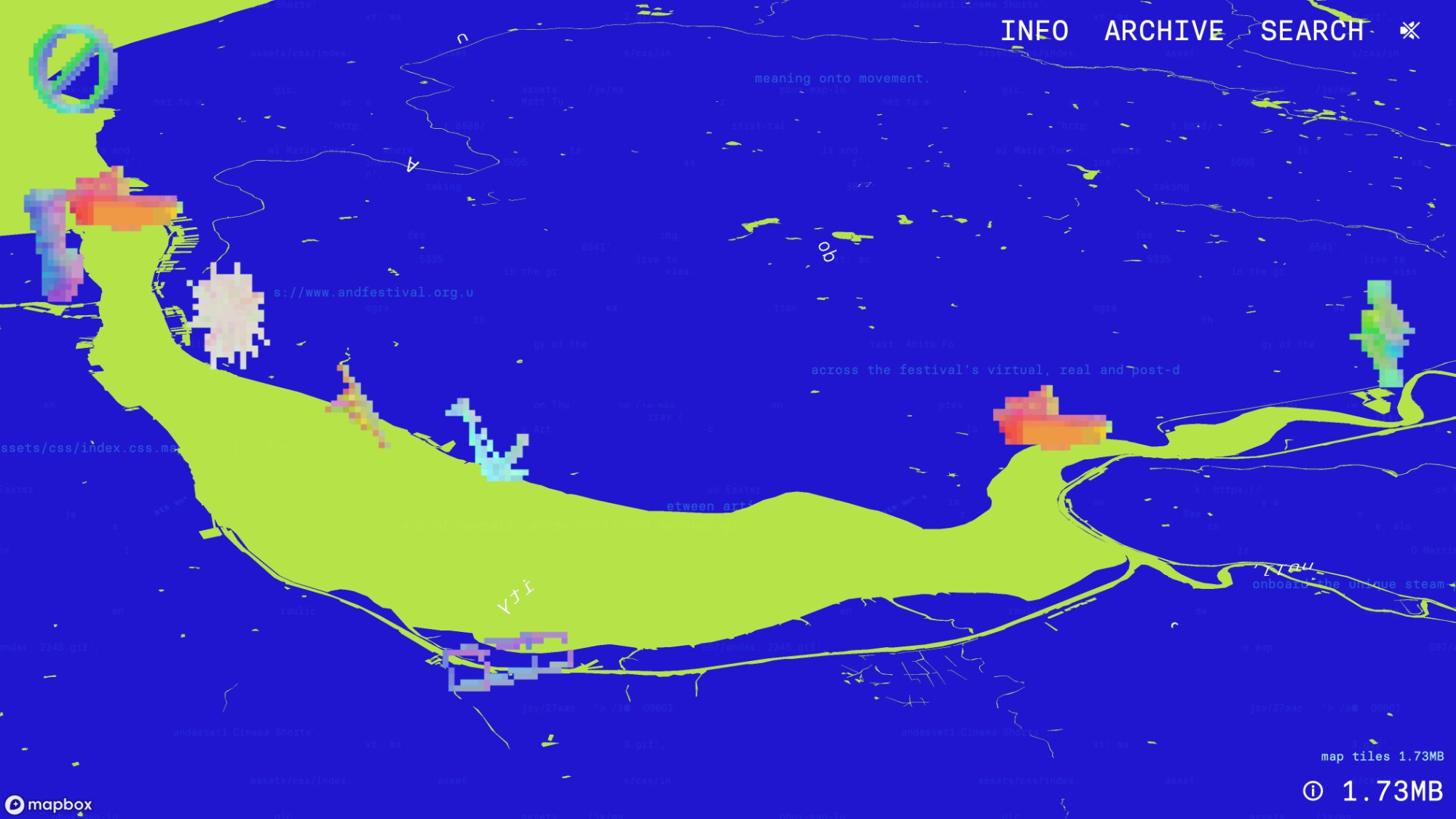
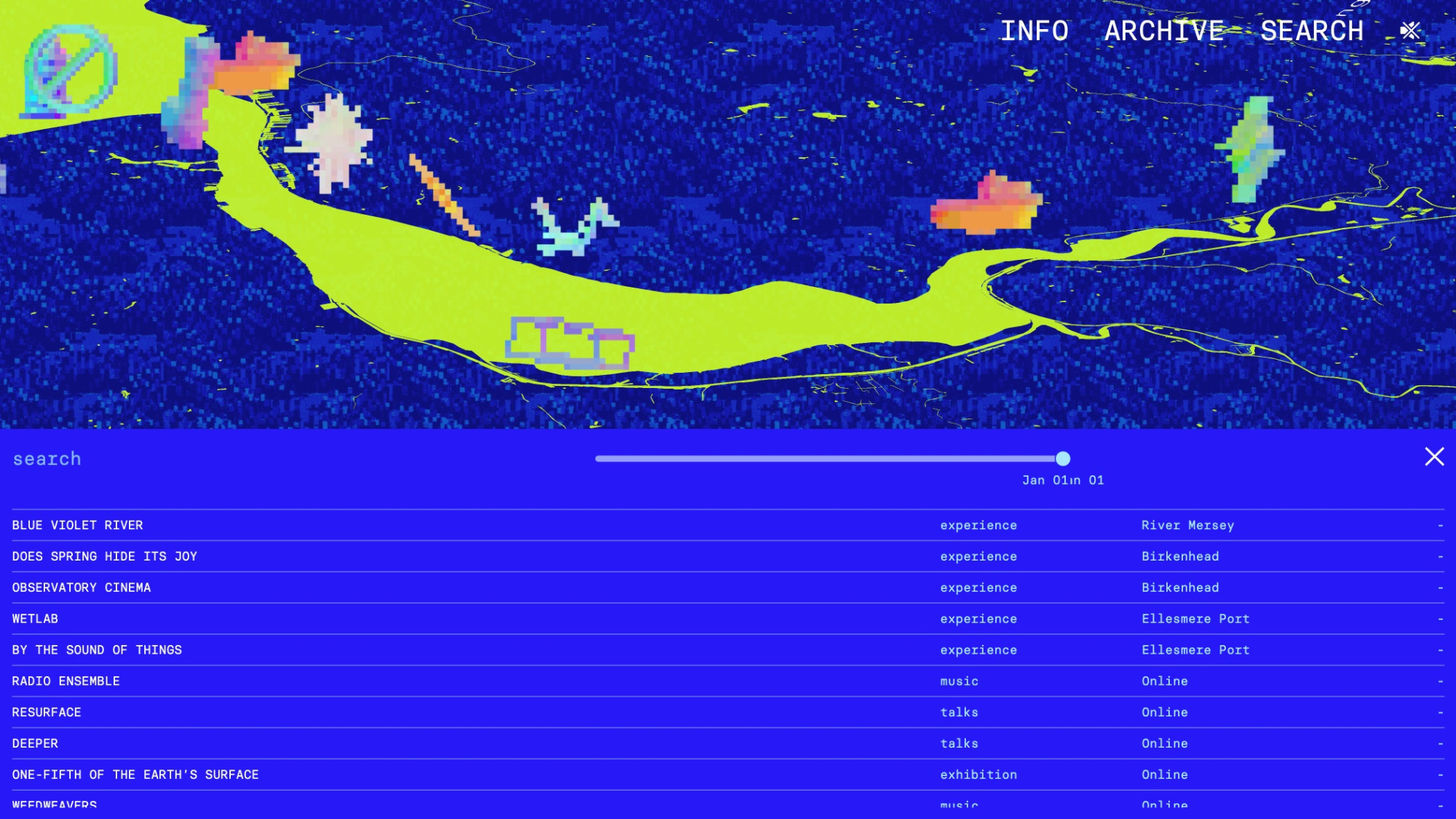
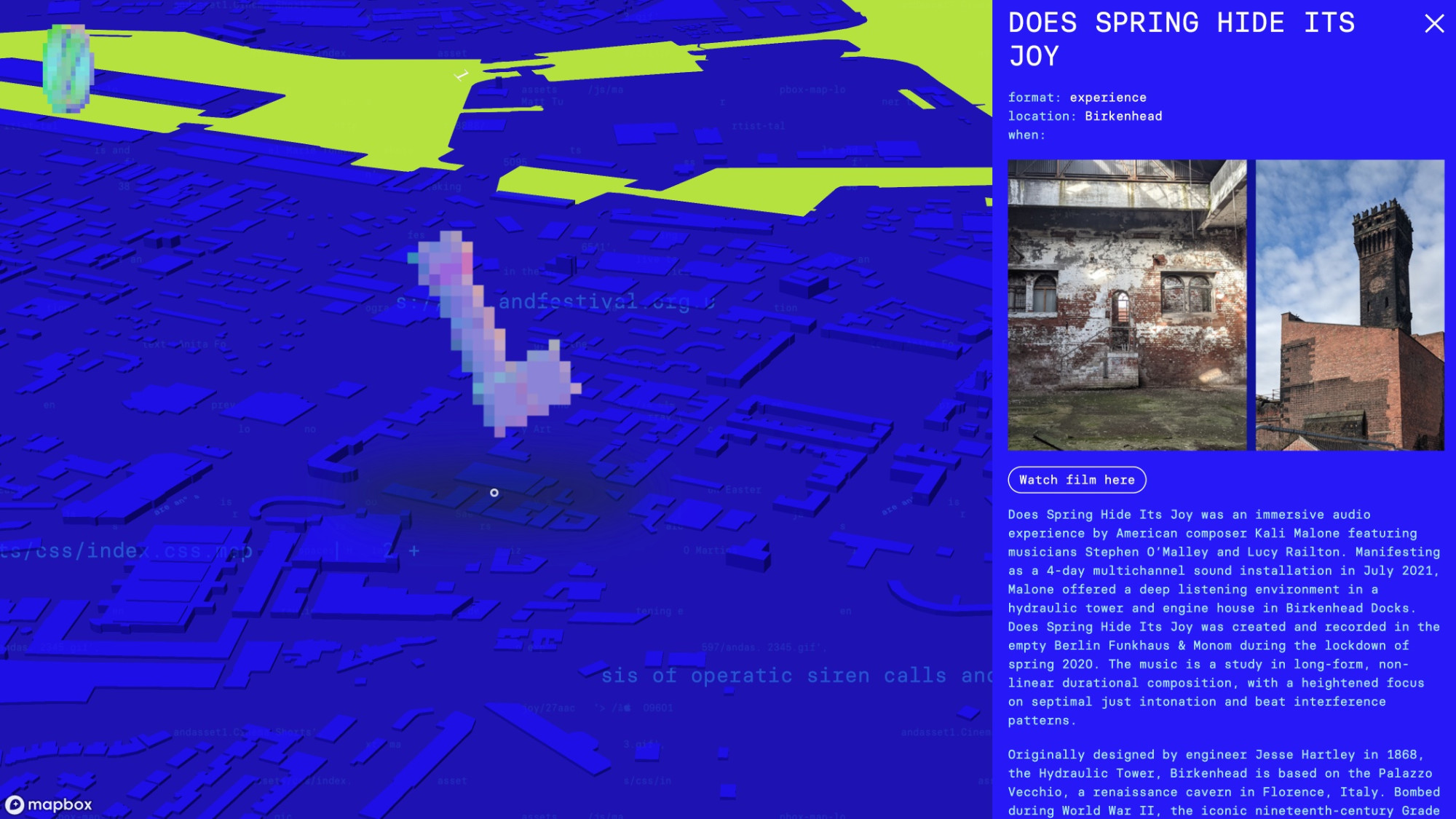
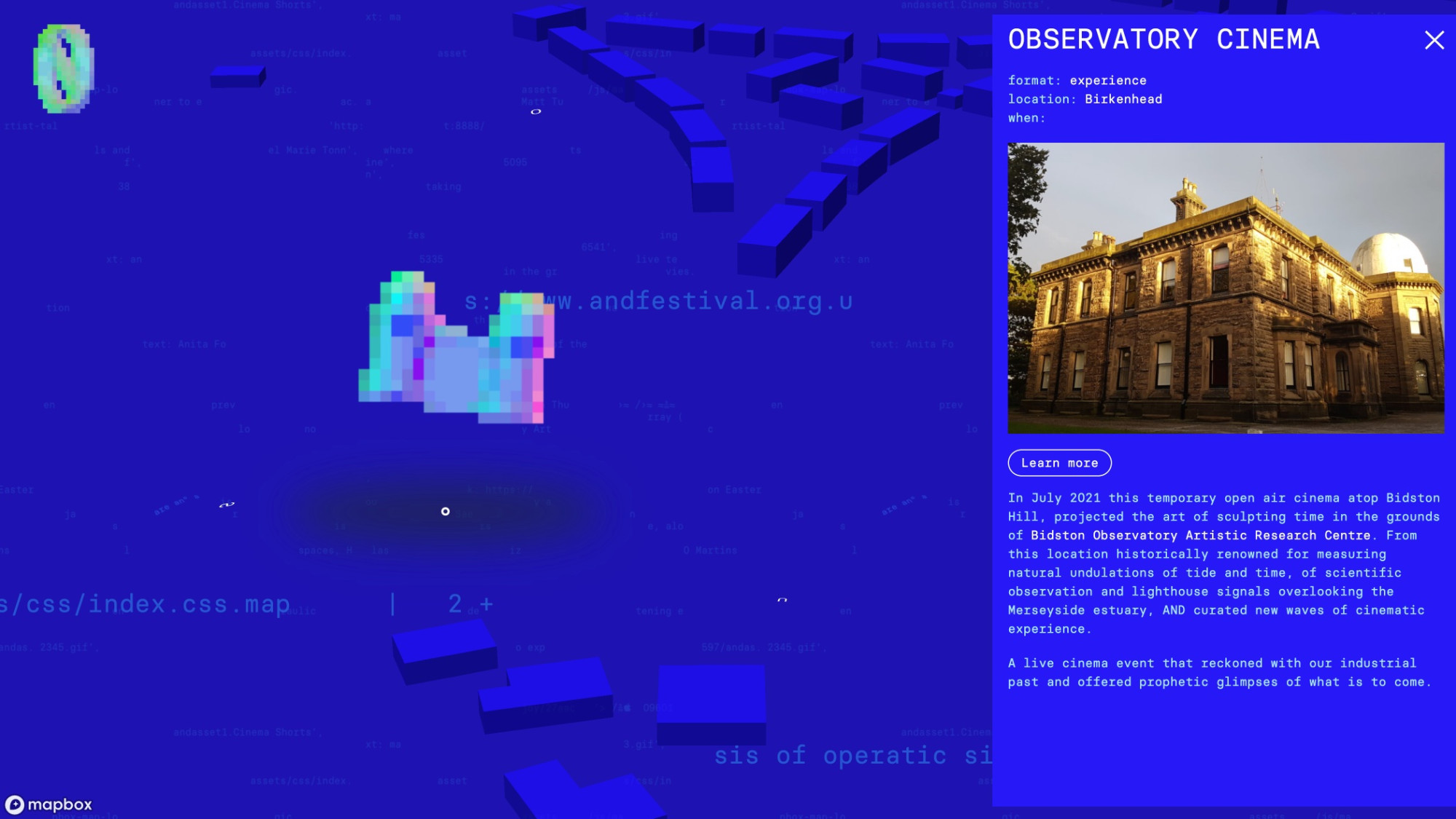
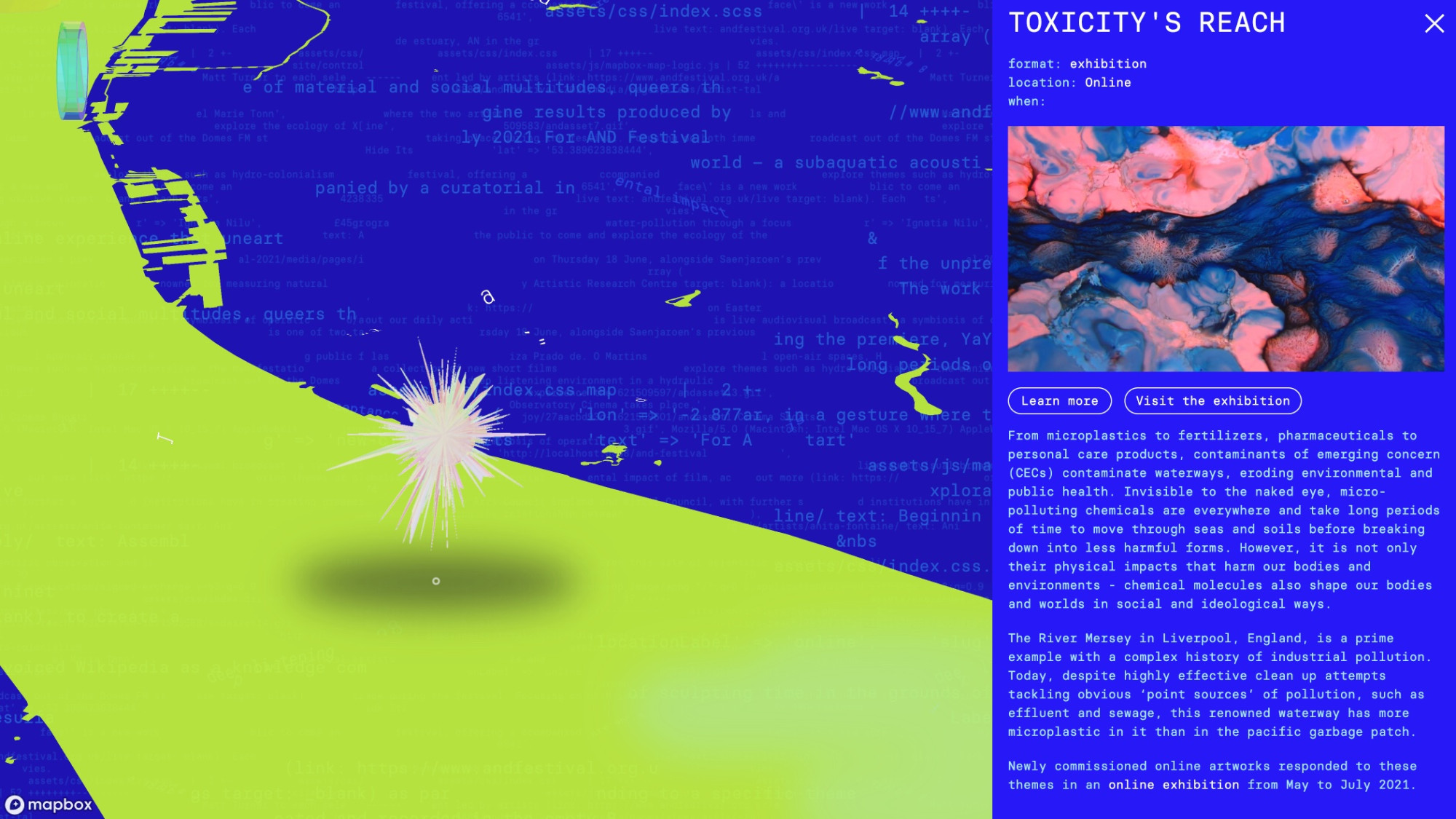
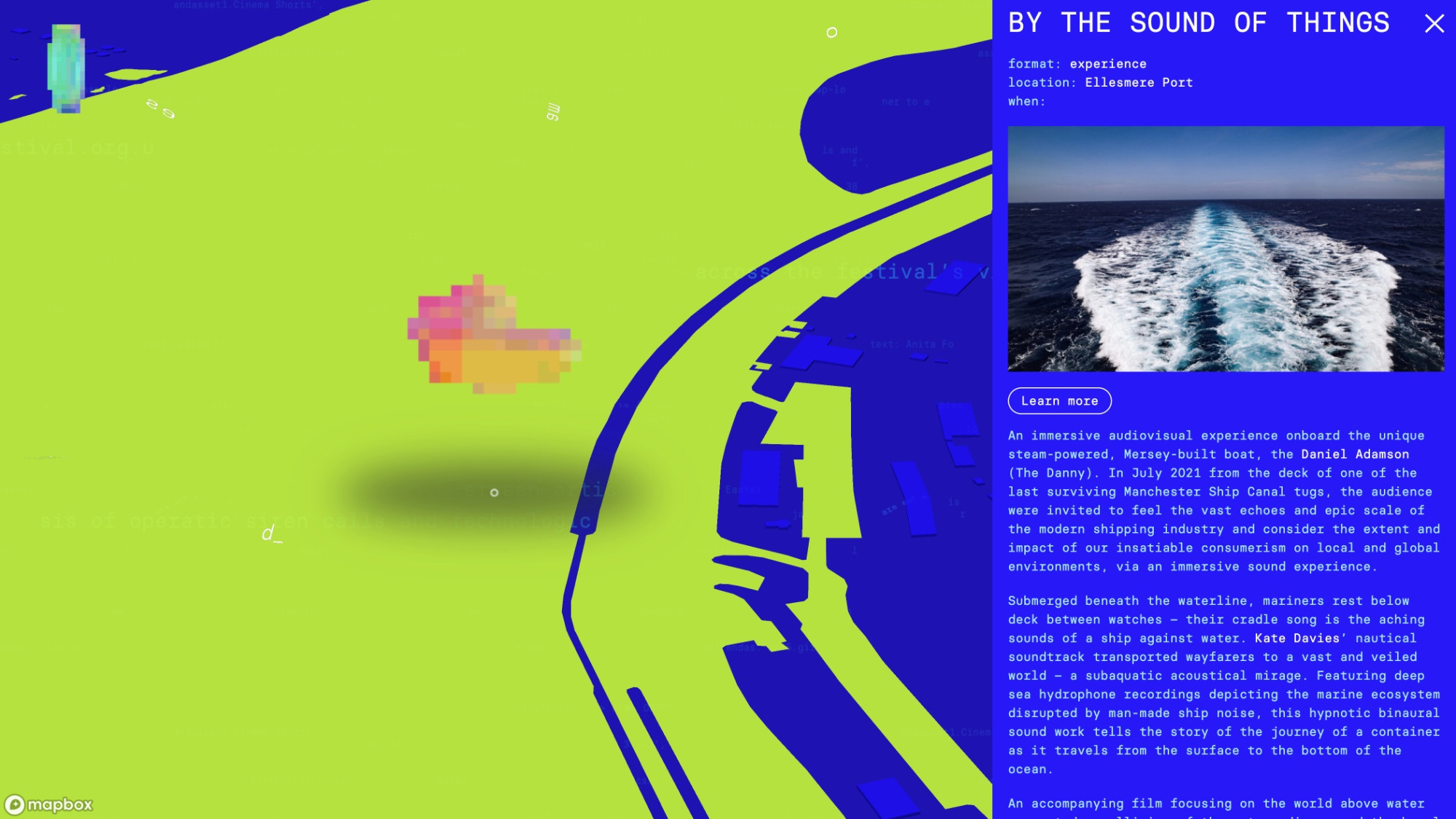
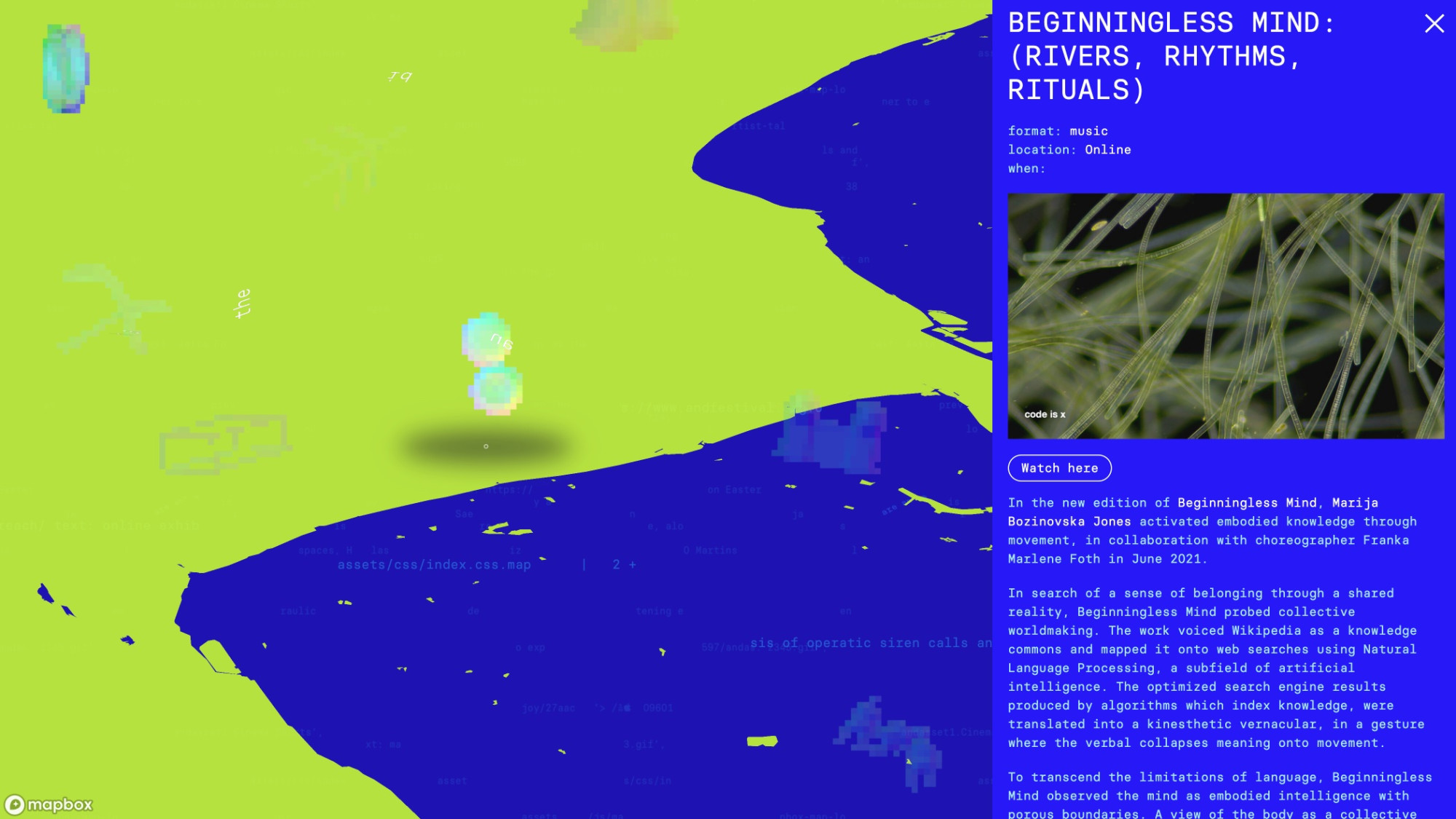
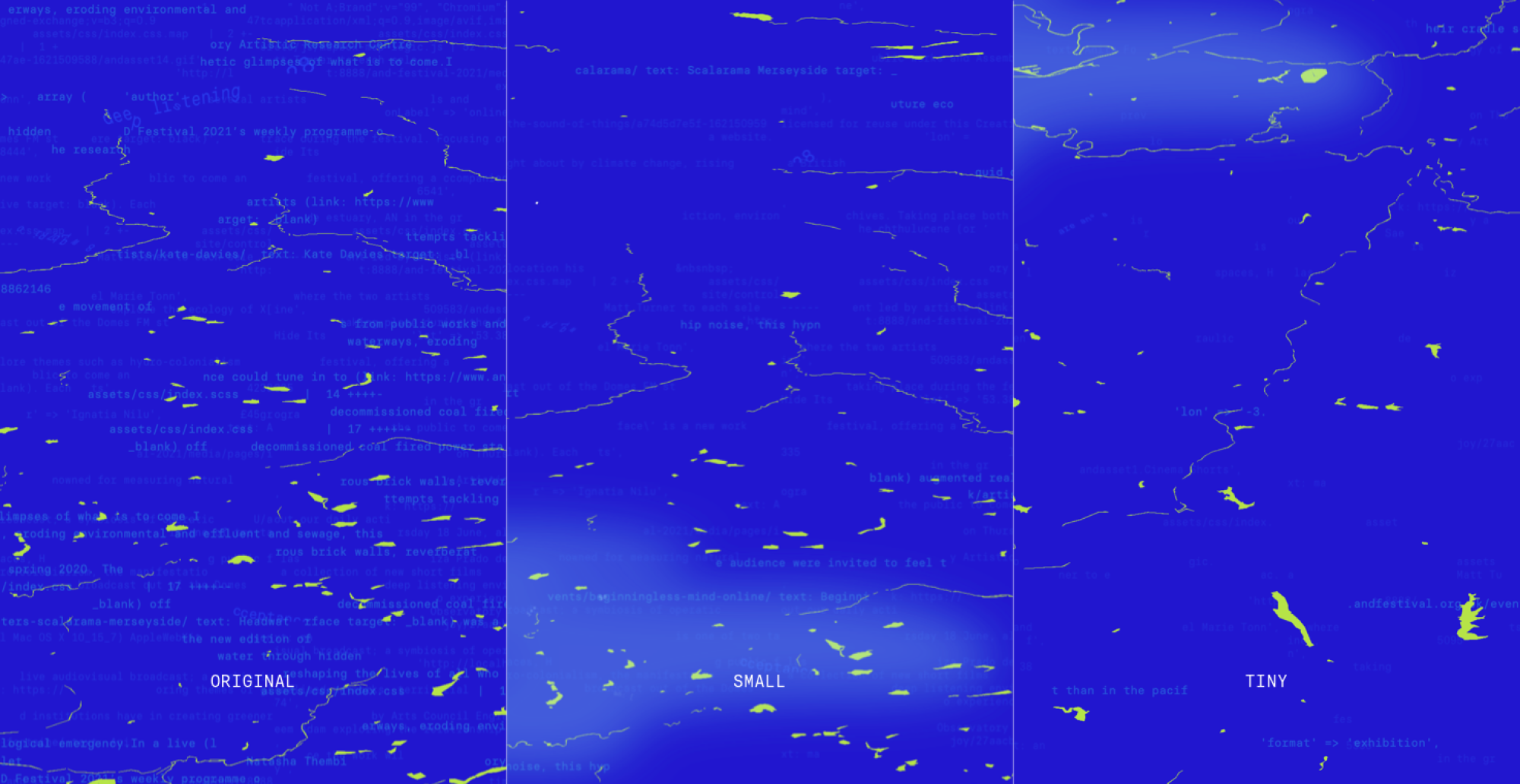
The minisite is available in three versions that correspond to different levels of energy consumption. The assets are incrementally compressed, producing different amounts of waste. During navigation, a counter in the lower right corner of the screen keeps track of the total download size, updating live while map tiles and images are loaded. This number is directly related to resource use and environmental impact.
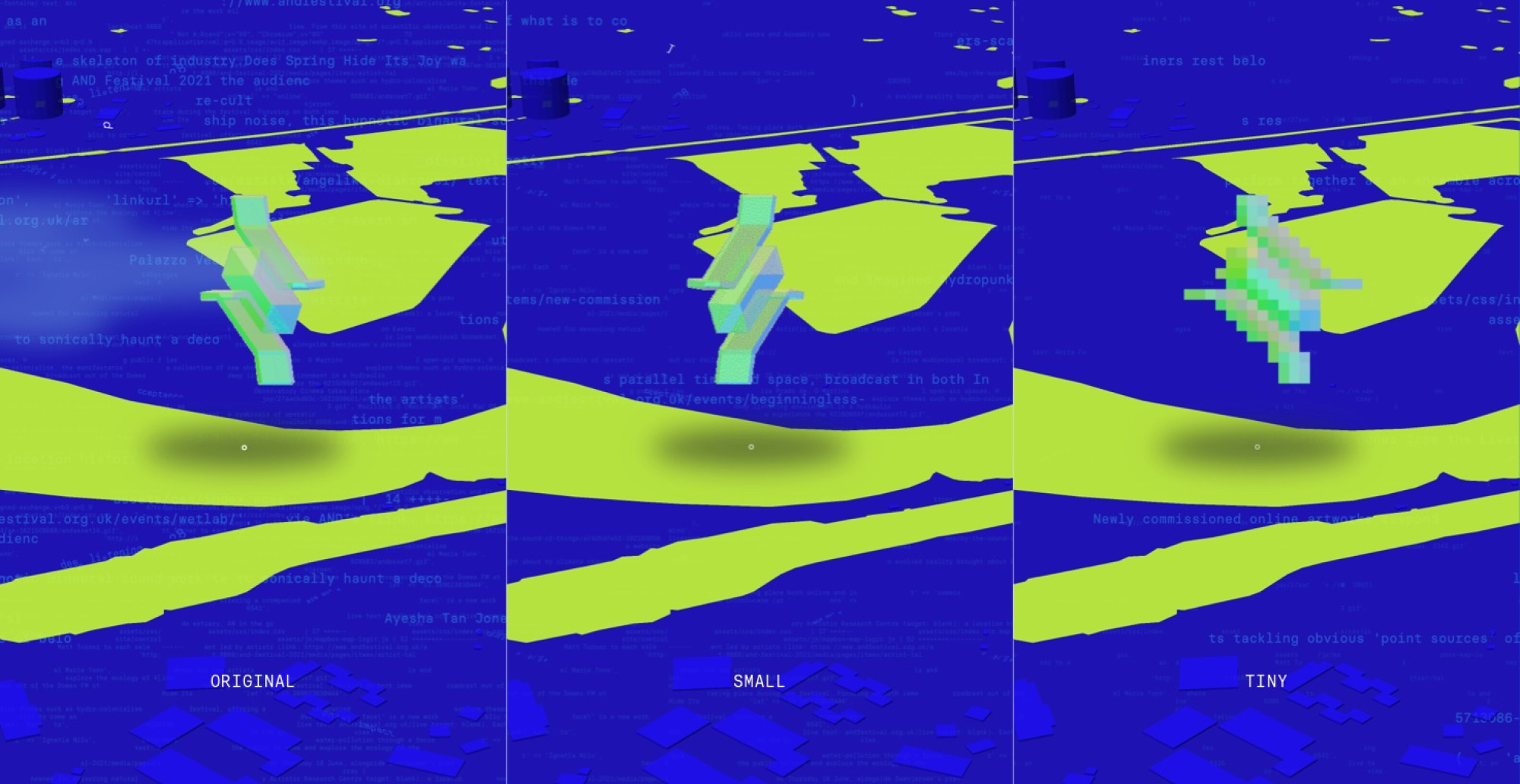
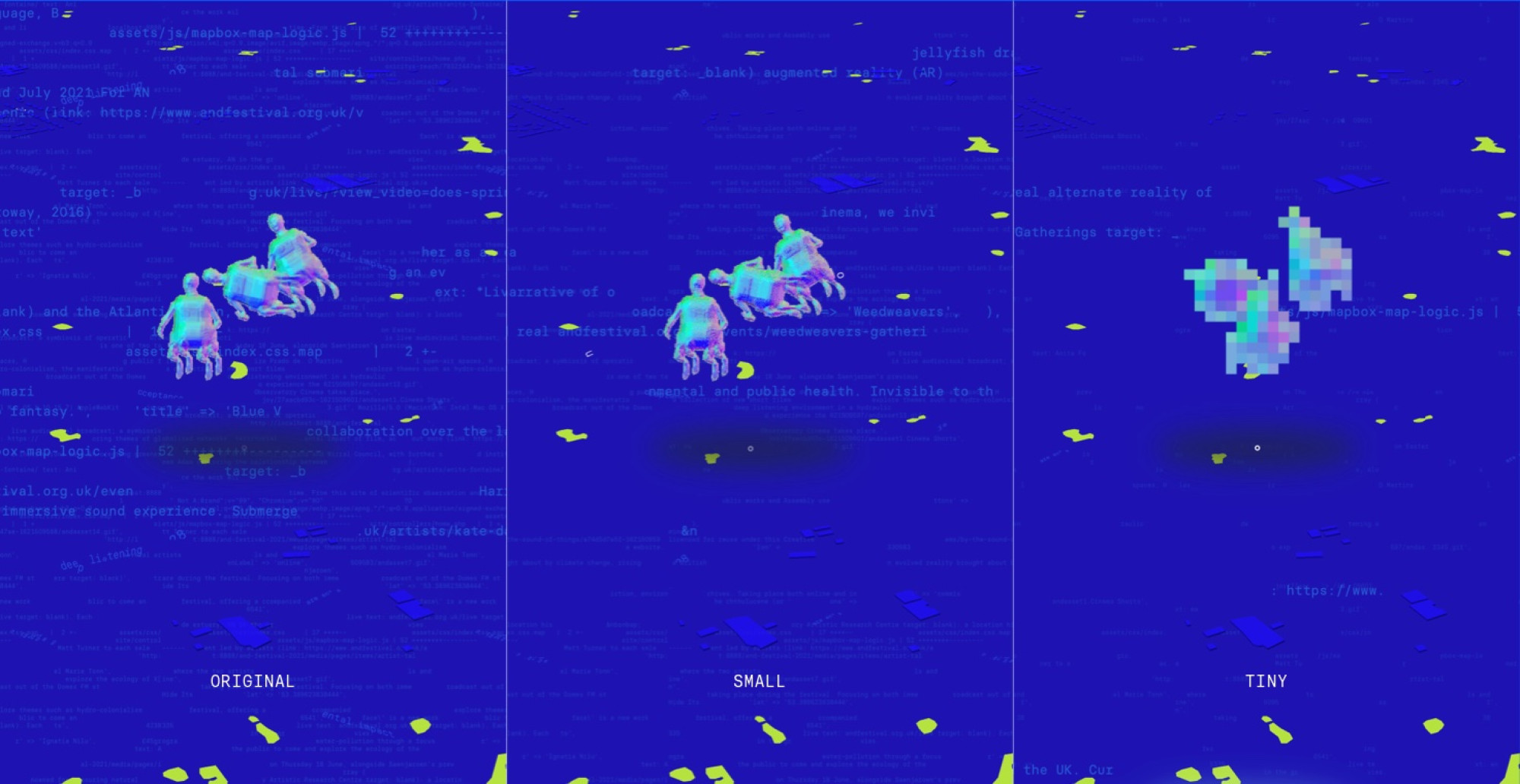
DIGITAL CARBON FOOTPRINT
The digital age has brought many benefits that have a positive impact on the fight against climate change and reducing CO₂ emissions, decreasing the need for international travel and industrial production. However, the production, use and transfer of data causes more CO₂ emissions than you might expect, referred to as our “digital carbon footprint”. In 2019, 4.1 billion people worldwide had access to the Internet. Every search query, streamed video and cloud computing action is responsible for ever-increasing global demand for energy, increasing CO₂ emissions. The majority of this digital footprint is caused by video streaming due to large data sizes of videos - by comparison, using a search engine or sending text-only emails has a negligible impact. It is difficult to estimate exactly how large our digital impact is. Studies estimate this to account for 2.3-3.7% of global CO₂ emissions, equivalent to the emissions of the entire aviation industry. On an individual level, it is possible to estimate more precisely how high the CO₂ emissions are and how they can be reduced by simple means. Despite being perceived as immaterial, the infrastructure we call the 'internet', the ethereal cloud, is greedy for resources. Like in Hayao Miyazaki’s toxic jungle, floating particles pollute the air, and toxic waste contaminates land and water. Kilometres of cables run across ocean floors to connect the continents; and uncountable tonnes of materials are used to manufacture the servers that store and transfer our data. Billions of kilowatts of energy are used to power these machines, cool the data centres that host them and power the devices of users. The waste in the background of the map is composed by traces of your online activity: cookies of sites you visited, http headers containing informations about your browser and device and pieces of the data that composes this site. The numbers below show the amount of waste that is produced by your navigation updated in real time.